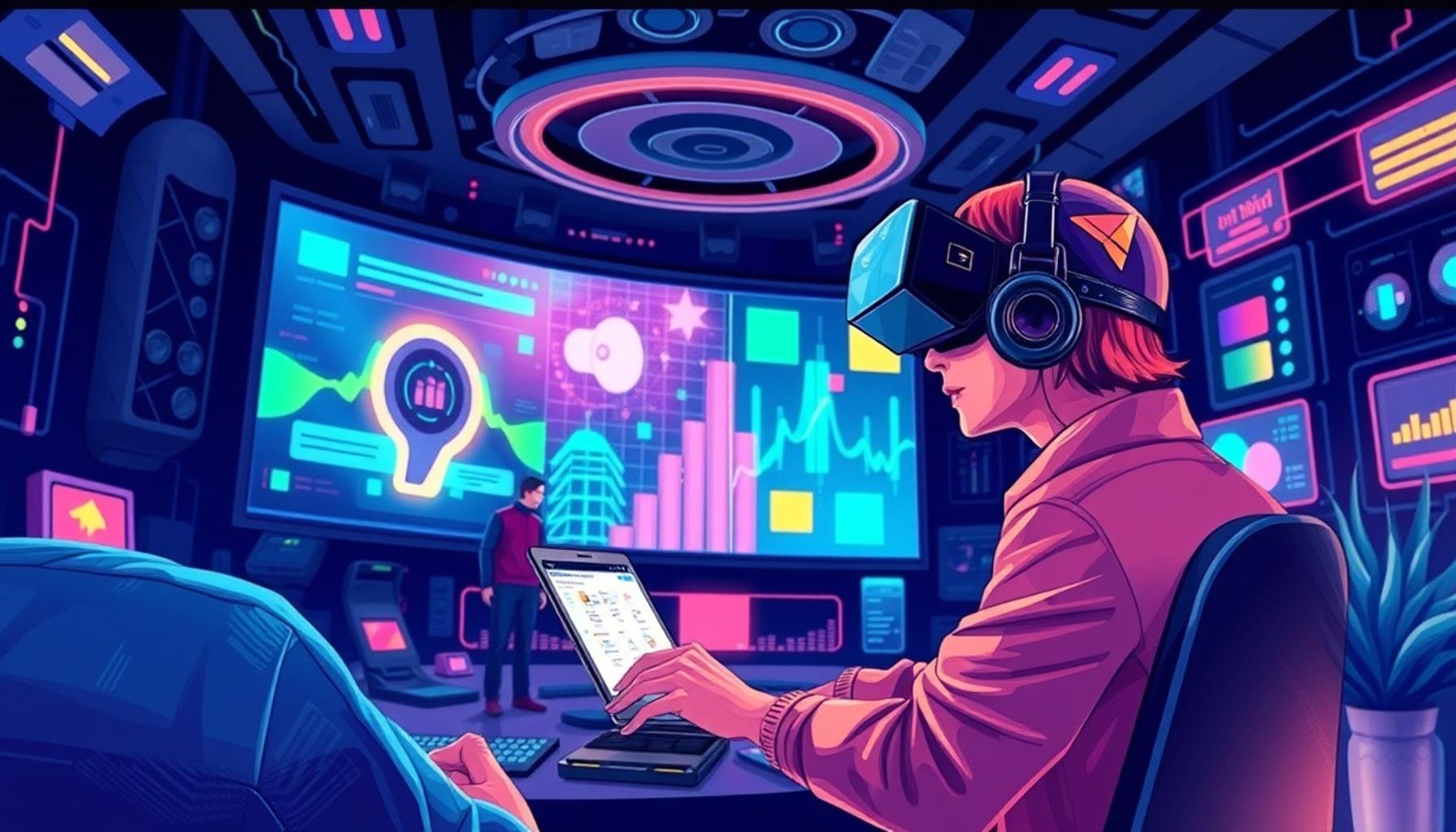
Interactive Narratives and User Experience: Exploring New Frontiers in Storytelling in Movies

The Evolution of Storytelling in Interactive Narratives
As technology progresses, the way stories are told has significantly changed. One of the most remarkable advancements in recent years is the rise of interactive narratives, a format that invites audiences to engage actively rather than passively consume content. This transformation is particularly prominent in both the realms of filmmaking and gaming, where traditional boundaries are blurred, allowing viewers to navigate through varying paths of a storyline based on their choices.
One of the hallmark features of interactive narratives is branching storylines. This structure empowers viewers to make choices at crucial moments, leading to different narrative paths and diverse endings. For instance, a viewer may face a decision that influences the protagonist’s fate and changes the entire outcome of the story. This feature not only personalizes the viewing experience but also encourages multiple viewings as audiences are eager to explore different scenarios and see how their choices impact the narrative.
Another significant aspect is user agency. This element instills in audiences a profound sense of control, making them feel like they are part of the storytelling process. The emotional investment can be heightened when individuals realize their decisions have tangible consequences in the storyline. For example, in a narrative where the choice is between helping a friend or pursuing a personal goal, the ramifications of that choice can create a deeply resonant experience for the viewer, evoking empathy and connection to the characters.
Immersive experiences represent yet another layer of this innovative storytelling. With advancements in technology, filmmakers can create environments that deepen viewer engagement. Virtual reality (VR) serves as an excellent example, allowing participants to explore 3D spaces and interact with characters and objects. In films or games designed for VR, viewers might not only watch a story unfold but can physically navigate through it, influencing events with their movements and choices.
Several recent examples illustrate how this trend is taking shape in both filmmaking and gaming:
- “Bandersnatch” – This innovative film on Netflix allows audiences to dictate the protagonist’s actions, leading to different storylines and conclusions. Viewers encounter multiple choices that shape the narrative in real-time, providing a unique experience each time the film is watched.
- “The Invisible Hours” – In this immersive VR experience, players explore a mansion where they unravel a murder mystery. As they walk through different rooms and interact with characters, they piece together various narratives based on the paths they choose to follow.
- “Late Shift” – This interactive film combines live-action with audience decision-making. Viewers are prompted to select options that affect the direction of the story, blending cinematic quality with the thrill of interactivity.
By embracing these interactive elements, filmmakers are not merely telling stories; they are fostering a user experience that is rich and multifaceted. This evolution in storytelling challenges traditional filmmaking methods and opens up new frontiers in cinematic expression. As audiences become increasingly accustomed to these interactive narratives, it is likely that we will see even more innovative approaches, further enhancing the relationship between stories and those who engage with them.
DIVE DEEPER: Click here to learn more about AI’s impact on film
Understanding User Engagement in Interactive Narratives
The shift towards interactive narratives has transformed how audiences engage with stories, leading to a deeper relationship between viewers and the content they consume. By allowing users to take an active role in shaping the narrative, filmmakers and game developers tap into a profound element of human experience: choice. This engagement goes beyond mere entertainment, establishing a dynamic interplay between the audience and the unfolding storyline.
At the core of this exploration is the idea of personalization. When viewers are presented with the option to influence the direction of a story, it changes their role from that of a passive observer to an active participant. This personalization allows individuals to connect with the narrative on a more intimate level. For example, consider a character-driven drama where the viewer can choose whether to support a character’s ethical dilemma or challenge their decisions. Each choice can resonate differently with the audience, leading to varied emotional responses and, consequently, a unique experience tailored to their values and perspectives.
Additionally, the concept of replayability becomes paramount in this new landscape. Traditional films often encourage audiences to experience them once or a few times, but interactive narratives introduce a new dimension by enabling multiple perspectives on the same story. With branching paths leading to differing endings, audiences are more likely to revisit these works, eager to uncover alternate outcomes based on their choices. Such replayability enhances the overall engagement, prompting viewers to reflect on how their decisions contribute to the storyline and explore various facets of the narrative.
Key elements that enhance user engagement in interactive narratives include:
- The Sense of Agency: This is the feeling of empowerment that comes from being able to make choices that influence the plot. When audiences experience agency, they develop a stronger emotional connection to the characters and story.
- Multiple Outcomes: Having various endings not only enriches the story but also encourages exploration. Viewers are curious about how different choices can lead to distinct resolutions, making them more invested in the narrative.
- Character Development: Interactive narratives often allow deeper exploration of characters through choices that reveal different traits or motivations. This depth fosters empathy and a greater understanding of the characters involved.
This transformative approach to storytelling invites audiences to consider their impact on the narrative landscape. It challenges the traditional notion of authorship where filmmakers hold the reigns, moving towards a collaborative experience that intertwines the creator’s and audience’s intentions. As interactive narratives continue to evolve, they hold the promise of redefining cinematic experiences, pushing the boundaries of storytelling and user experience in ways previously unimaginable.
DIVE DEEPER: Click here to discover the latest streaming trends
The Impact of Technology on Interactive Storytelling
The rise of digital technology has been a primary catalyst in the growth of interactive narratives, profoundly altering how stories are told and experienced. Advances in virtual reality (VR), augmented reality (AR), and artificial intelligence (AI) have birthed new storytelling methods that offer immersive experiences previously unimaginable. These technologies allow viewers to enter and interact with a narrative environment, thus deepening their connection to the story.
For instance, with virtual reality, users can literally step into a film’s world. This technology enables individuals to experience the perspective of a character, making choices that can affect the narrative in real time. A striking example of this is a VR film called “The Invisible Man,” where viewers are not only spectators but also play pivotal roles in the unfolding drama. This level of immersion enhances empathy, as viewers can feel the weight of the character’s decisions and emotional struggles, making their experience uniquely personal.
Moreover, augmented reality expands the boundaries of traditional viewing by blending digital elements with the real world. Applications like “Harry Potter: Wizards Unite” let users interact with characters and settings from the Harry Potter universe in their own environment. This technology encourages engagement beyond the screen, as users can explore their surroundings to unlock story elements and mysteries, creating a novel interactive experience that weaves storytelling into daily life.
Artificial intelligence has also transformed the narrative landscape by enabling more sophisticated branching storylines. AI systems can adapt narratives based on user interactions, offering truly personalized experiences. For example, in video games like “Detroit: Become Human,” AI algorithms process player choices in real-time, creating unique character interactives and consequences that reflect the player’s decisions. This adaptability allows for a more organic narrative that feels authentic and responsive to the user’s preferences.
As these technologies evolve, new challenges arise for creators. The question of user agency versus narrative integrity becomes critical. While giving audiences freedom to explore is essential, filmmakers must also ensure that the story progresses in a coherent manner. Striking a balance between these elements can prove difficult, requiring innovative solutions to maintain narrative focus while allowing for user-driven exploration.
Additionally, accessibility plays a crucial role in shaping the future of interactive narratives. Introducing features that cater to diverse audiences, including those with disabilities, can broaden the appeal of these interactive experiences. Developers are increasingly incorporating options like audio descriptions, text-to-speech, and customizable interfaces to ensure that everyone can participate in the storytelling process, making narratives more inclusive.
In summary, the intersection of technology and interactive storytelling opens up exciting avenues for creative expression and audience engagement. As filmmakers and developers continue to explore these new frontiers, the evolution of user experience in narratives remains a captivating area of study. The possibilities are vast, and the potential for innovative storytelling is truly revolutionary.
DIVE DEEPER: Click here to learn more about sustainability in cinema
Conclusion
As we stand at the cusp of a new era in filmmaking, the fusion of interactive narratives with cutting-edge technology is redefining the way stories are told and experienced. The significant role of virtual reality, augmented reality, and artificial intelligence illustrates the boundless possibilities for audience engagement and participation. By stepping into the shoes of characters and making choices that shape the narrative, viewers are no longer mere spectators but active participants who forge their own unique paths within the story.
Moreover, as filmmakers grapple with the challenge of maintaining narrative coherence while offering users autonomy, the importance of striking a balance between user agency and storytelling integrity emerges as a crucial consideration. This interplay highlights the need for innovative approaches that preserve the essence of storytelling while adapting to the audience’s desire for personalization and interaction.
Furthermore, the commitment to accessibility ensures that diverse audiences can partake in these interactive experiences, enriching the narrative landscape. As developers implement features catering to all users, the inclusivity of interactive storytelling becomes paramount, opening doors for a wider array of voices and perspectives.
In conclusion, the exploration of interactive narratives represents an exhilarating frontier in filmmaking that promises to invigorate our understanding of storytelling. As the technology continues to advance, we may witness a future where films serve as collaborative experiences, inviting audiences to engage, explore, and experience stories in vibrant, transformative ways. The future of storytelling is indeed bright, and as creators continue to innovate, the potential for new forms of artistic expression remains virtually limitless.

Linda Carter
Linda Carter is a writer and film content specialist focused on movies, entertainment trends, cast insights, and viewing recommendations. With extensive experience helping readers discover new films and better understand the world of cinema, Linda shares her knowledge on our platform. Her goal is to empower readers with practical insights and engaging perspectives to explore movie releases, find worthwhile titles, and enjoy a richer entertainment experience.