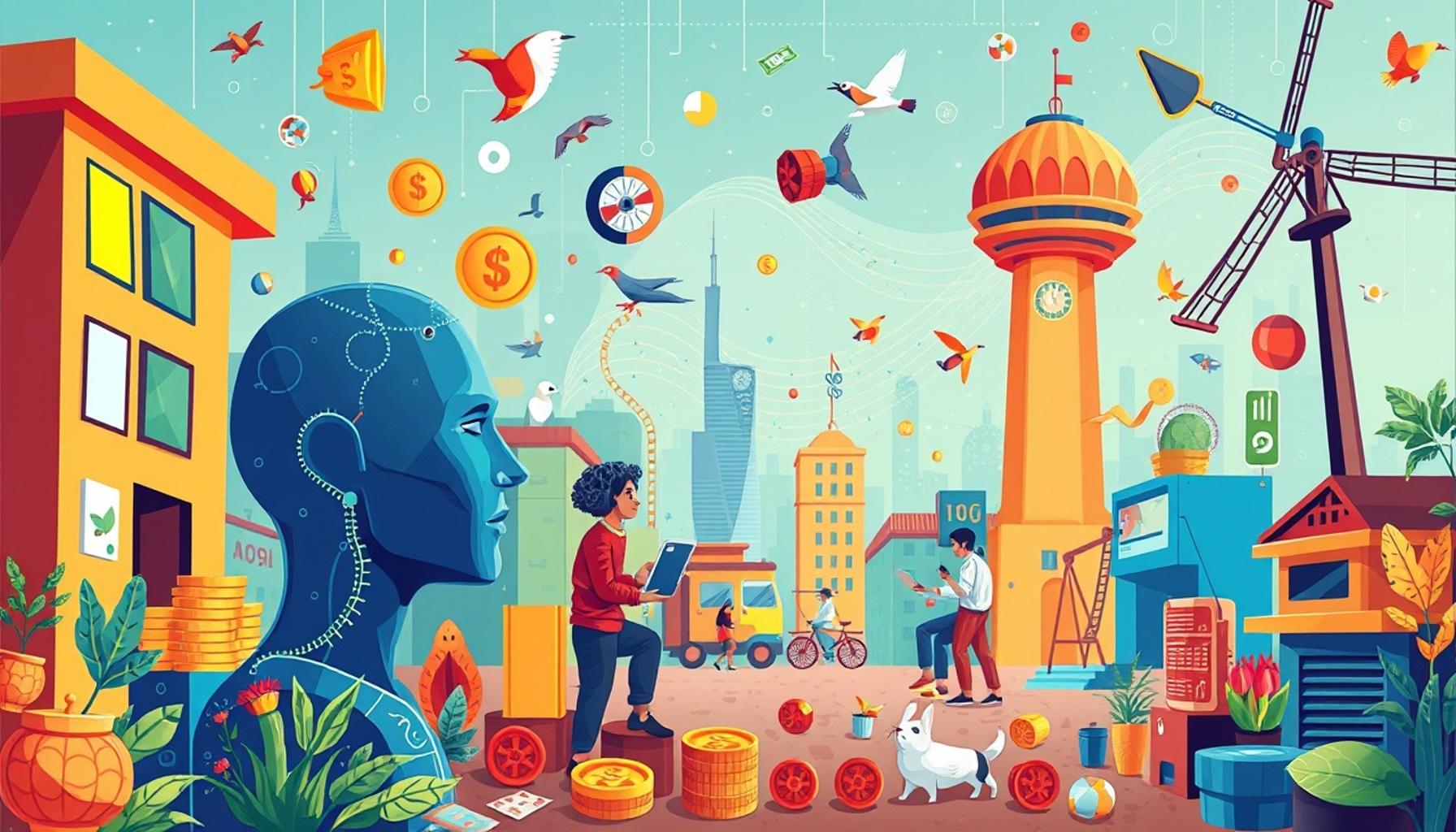
The Influence of Artificial Intelligence on the Creation of New Jobs in South Africa

Understanding AI’s Role in the South African Job Market
In recent years, the emergence of artificial intelligence (AI) has significantly reshaped various sectors globally, and its impact on the South African job market is becoming increasingly critical. With the unique economic landscape characterized by both promising opportunities and notable challenges, it is essential to explore how AI is influencing employment in the country.
Automation of Repetitive Tasks
One of the most visible impacts of AI is the automation of repetitive tasks. Traditional roles that involve routine activities such as data entry or basic customer service may face decline as AI systems take over these functions. For instance, chatbots have already started transforming the customer service industry, providing quick responses to frequently asked questions without human intervention. While this might lead to a reduction in some jobs, it simultaneously creates roles focused on managing, maintaining, and improving these AI-driven systems. Individuals who can analyze data generated from these processes will find themselves in high demand, thus shifting the job landscape towards more strategic roles.
Emergence of Tech-Driven Industries
As AI technology continues to evolve, new industries are surfacing, particularly in fields such as data analysis, cybersecurity, and AI development. Sectors like these are burgeoning in South Africa, fueled by a generation that is increasingly tech-savvy. Companies need skilled professionals who can design AI systems, analyze vast amounts of data, and ensure the cybersecurity of sensitive information. For example, the rise of fintech in South Africa, which leverages AI for secure transactions and improved customer experiences, is creating numerous job opportunities for graduates in computer science and finance. Investing in education and training in these areas can lead to rewarding careers for many South Africans.
Upskilling Opportunities
The introduction of AI into various sectors emphasizes the need for continuous learning and adaptability among the workforce. The demand for skills related to AI is prompting educational institutions and training programs to offer courses that equip individuals with relevant knowledge. For instance, organizations like the South African Communications and Digital Technologies department are promoting initiatives to upskill workers in digital literacy. This trend provides a unique opportunity for workers to enhance their capabilities, ensuring they remain competitive in an ever-changing job market. By embracing lifelong learning, individuals can pivot towards emerging roles that AI will uncover rather than being left behind.
In conclusion, the relationship between AI and employment in South Africa is multifaceted yet full of potential. As automation reduces the need for certain traditional roles, new opportunities arise in tech-driven industries and through upskilling. Understanding these dynamics is essential for South Africans to effectively navigate the evolving job landscape and leverage the benefits of AI to foster a robust economy.
CHECK OUT: Click here to explore more
Transformations in the Workforce Due to AI
The implementation of artificial intelligence in various sectors of the South African economy is leading to a transformative experience in the workforce. The nature of work is evolving, and as we adapt to these changes, it is essential to understand the implications for job creation and the types of roles that are evolving or emerging as a result of AI integration.
Redefining Job Roles
As AI tools and systems take on repetitive and time-consuming tasks, they are allowing workers to focus on more complex and creative aspects of their jobs. This shift leads to the redefinition of existing roles and necessitates a change in the skill set required for positions in numerous industries. For instance, in the agricultural sector, AI applications that monitor crop health using satellite imagery are enabling farmers to make data-driven decisions. Instead of spending valuable time on physical inspections, farmers can now engage in strategic planning and innovation based on the insights provided by AI.
Additionally, many industries are seeing a move towards collaboration between human workers and AI technologies. This synergy means that employees must develop new skills to effectively interact with advanced systems and machinery. Key examples of emerging job roles include:
- Data Scientists: Professionals skilled in extracting insights from complex data sets and leveraging AI tools to inform business decisions.
- AI Ethicists: Individuals responsible for assessing the ethical implications of AI applications, ensuring technology is utilized responsibly.
- AI Trainers: Experts who train AI systems to recognize patterns and improve performance by providing continuous feedback and guidance.
Boosting Economic Growth through Startups
The rise of AI is also fostering a startup ecosystem in South Africa, where innovative minds are seizing the moment to launch ventures that utilize AI to solve local problems. These startups are not just creating jobs directly; they are also fostering a network effect that leads to additional employment opportunities. For example, a tech startup focusing on AI-driven logistics may require software engineers, marketing professionals, and customer support staff, contributing to a substantial increase in job opportunities.
Moreover, the government initiatives aimed at nurturing innovation and providing support for new businesses are accelerating this trend. Support programs such as grants and mentorship from both private and public sectors are equipping startups with the resources needed to drive growth and job creation. As more entrepreneurs emerge with AI-related ideas, the South African job market is becoming a fertile ground for innovation and job diversification.
The evolving landscape of AI in South Africa showcases both the challenges and the opportunities that come with new technologies. By recognizing the changing dynamics of job roles and the growth of startups, we can better prepare for an economy where AI plays a crucial part in shaping the workforce of the future.
SEE ALSO: Click here to read another article
New Opportunities in Emerging Industries
The impact of artificial intelligence is not confined to traditional sectors; it is also creating new opportunities in emerging industries. As South Africa continues to embrace digital transformation, sectors such as fintech, health tech, and edtech are witnessing significant growth, primarily driven by AI innovations. These industries present a platform for diverse job opportunities for skilled individuals.
Fintech Growth and AI
The financial technology landscape in South Africa has experienced remarkable evolution in recent years, and AI plays a central role in this transformation. With AI-driven tools, companies are developing advanced algorithms for fraud detection, risk assessment, and personalized financial services. For instance, chatbots powered by AI are revolutionizing customer service within banks and financial institutions, providing immediate assistance for inquiries such as loan applications or transaction issues.
This shift results in the creation of several roles, including:
- Financial Analysts: Professionals who use AI analytics to assess financial health and assist in strategy development based on real-time data.
- Compliance Officers: Individuals tasked with ensuring that AI-driven financial products adhere to local regulations and ethical standards.
- Cybersecurity Specialists: Experts responsible for protecting financial systems from cyber threats, utilizing AI tools to detect vulnerabilities and breaches.
AI in Health Tech
The growing integration of AI in the healthcare sector is another area ripe with job creation. South Africa’s health tech companies utilize AI for diagnostics, predictive analytics, and personalized medicine. For instance, AI systems can analyze medical data to identify health trends and predict outbreaks of diseases, enabling healthcare professionals to allocate resources efficiently.
This integration has led to new roles such as:
- AI Health Consultants: Specialists who help healthcare facilities implement AI solutions tailored to enhance patient outcomes.
- Medical Data Analysts: Professionals who interpret vast amounts of health data to facilitate better treatment plans and medical research.
- Telemedicine Coordinators: Individuals who oversee the virtual delivery of healthcare services through AI-driven platforms.
Educational Advancements and AI
In addition to finance and healthcare, education is also experiencing a cultural shift due to AI. Edtech solutions leveraging AI are being implemented to develop personalized learning experiences, from intelligent tutoring systems to assessment tools that adapt to individual student needs.
This paradigm shift in education paves the way for positions such as:
- AI Learning Specialists: Educators who design and implement AI-enhanced curricula to foster learning outcomes.
- Data-Driven Educators: Professionals focused on using analytics to shape teaching methods and improve student engagement.
- Edtech Product Managers: Individuals responsible for guiding the development of educational technology products that utilize AI functionalities.
As we move forward, the intersection of AI and these emerging industries in South Africa indicates a significant potential for job creation. By leveraging advancements in technology, the nation can cultivate a workforce that is not only adaptive but also innovatively skilled, ready to meet the demands of a rapidly changing economy.
SEE ALSO: Click here to read another article
Conclusion
In conclusion, the advent of artificial intelligence signifies an exciting turning point for South Africa’s job market. By not only enhancing efficiency in existing roles but also fostering the emergence of entirely new professions in sectors such as fintech, health tech, and edtech, AI presents remarkable opportunities for growth. As demonstrated, the introduction of AI technologies is necessitating roles that intertwine technical knowledge with industry-specific expertise, paving the way for professionals like financial analysts, AI health consultants, and AI learning specialists to thrive.
However, it is crucial to acknowledge that the transition towards an AI-driven economy will require strategic planning and investment in education and training. The South African government, alongside businesses and educational institutions, must prioritize upskilling the workforce to align with these emerging demands. Initiatives such as coding boot camps, AI workshops, and partnerships between universities and tech companies can help prepare the next generation of workers.
Ultimately, while the integration of AI may evoke concerns regarding job displacement, it simultaneously opens avenues for innovation and economic expansion. By adapting and embracing the changes brought about by AI, South Africa can harness its potential—not just to replace jobs, but to create a thriving job market rich with opportunities that encourage diversification and inclusivity. Therefore, fostering a proactive approach will enable the nation to confidently navigate the complexities of this technological revolution and empower its workforce for future challenges.

Linda Carter
Linda Carter is a writer and expert known for producing clear, engaging, and easy-to-understand content. With extensive experience in guiding people as they pursue their goals, she shares valuable insights and practical advice. Her mission is to help readers make informed choices and achieve meaningful progress.