
Augmented Reality in Education: Innovations that Transform Learning in the Classroom
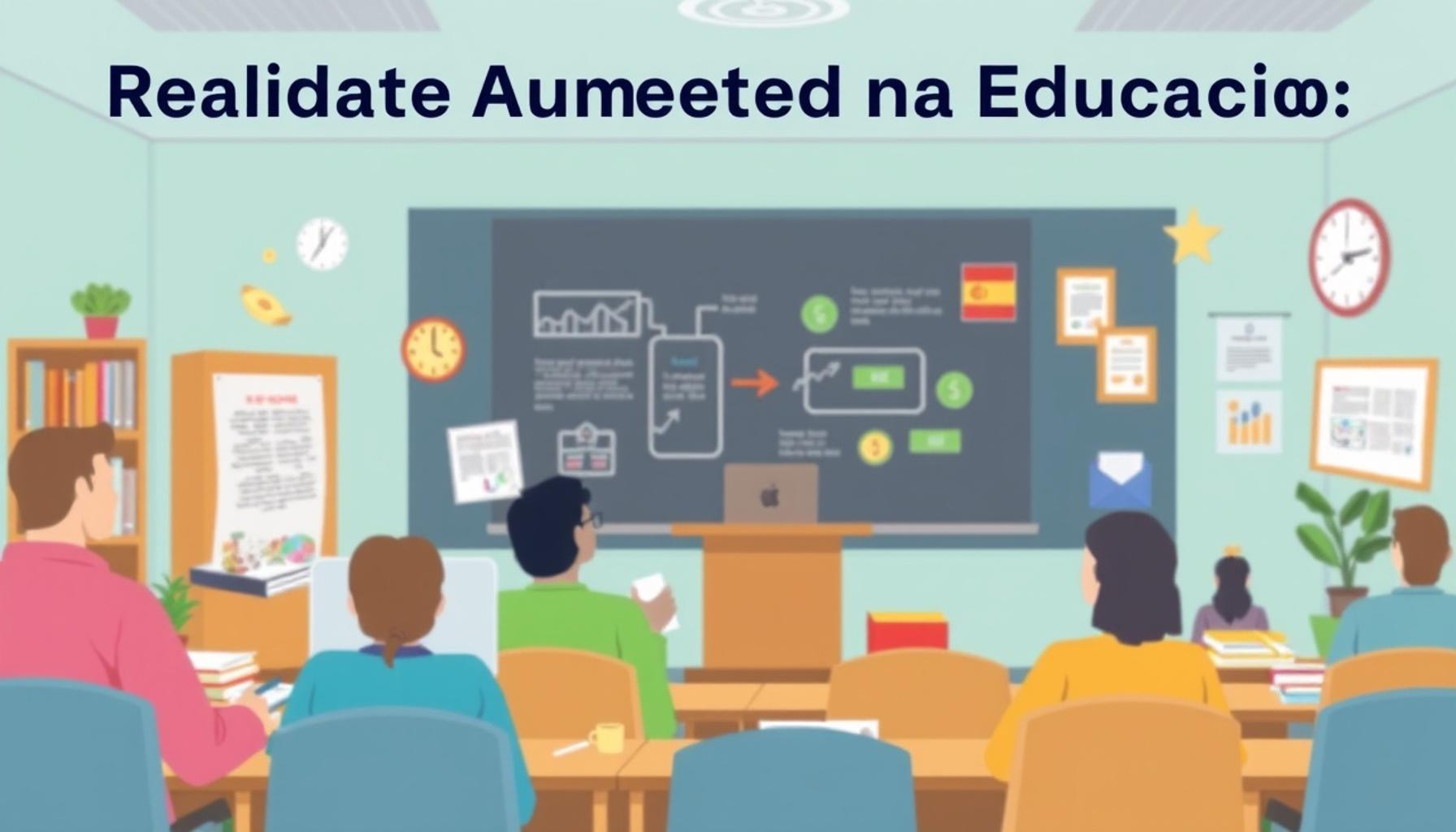
Transforming Learning with Augmented Reality
The classroom environment is rapidly evolving, thanks to the integration of technology. One of the most exciting developments is Augmented Reality (AR), which blends digital information with the real world, enhancing the learning experience.
With the ability to overlay digital elements onto the physical world, AR is making education more interactive and accessible than ever before. This innovative technology not only captivates students’ attention but also encourages deeper engagement with the material being taught. For example, when students study biology, they can use AR to analyze interactive 3D models of the human body. This allows them to visualize and explore the complex systems and organs, leading to greater understanding and retention.
Innovative Applications of AR in the Classroom
AR provides a broad array of applications that redefine traditional educational experiences:
- Virtual Field Trips: Imagine a history class taking a trip to ancient Rome without ever leaving the school. AR can transport students to significant historical sites, allowing them to explore and interact with different timelines and cultures. This not only broadens their horizons but also fosters a genuine interest in geography and history.
- Gamified Learning: Lessons can be transformed into engaging games where students can compete and collaborate. For instance, an AR-based math game could turn problem-solving into an adventure, where students embark on quests to unlock new levels by correctly answering mathematical questions. This kind of learning motivates students to participate actively and boosts their confidence.
- Enhanced Visual Learning: Subjects such as chemistry and physics often involve complex concepts that can be difficult to grasp. AR can break these down into easily digestible visual components, allowing students to observe chemical reactions or physical forces in a dynamic format. This approach appeals to visual learners and can help demystify challenging materials.
These features not only captivate students’ attention but also enhance comprehension and retention. With AR, the traditional methods of teaching evolve into interactive experiences that cater to various learning styles. For instance, a student struggling with reading comprehension may benefit from an AR tool that presents story elements alongside visual aids, helping them contextualize the narrative better.
As educators embrace these tools, the potential to foster creativity and critical thinking in students grows. By encouraging students to interact with content in diverse ways, AR nurtures their problem-solving skills and promotes innovation. Consequently, classrooms transform into vibrant spaces where learning knows no bounds and students are inspired to explore, discover, and create.
DISCOVER MORE: Click here to uncover the impact on consumer experience
Enhancing Classroom Experiences with Augmented Reality
The advent of Augmented Reality (AR) has redefined how students interact with their educational content. By enabling the digital overlay of information onto the physical world, AR creates new avenues for exploration and understanding. This immersive experience is not just a novelty; it serves practical educational purposes that can enhance learning outcomes across various subjects.
One of the most notable attributes of AR in the classroom is its ability to provide real-time feedback, which is crucial for effective learning. For instance, in a science class, students can perform experiments virtually, seeing immediate results and gaining insights into scientific principles without the physical constraints of a traditional lab setup. Instead of merely reading about chemical reactions, they can witness them occurring, which fosters a deeper understanding of the material.
Practical Applications of AR in Today’s Classrooms
Educators are increasingly incorporating AR into their lesson plans, generating exciting and diverse applications that cater to a range of subjects:
- Interactive Learning Experiences: AR transforms standard lessons into interactive experiences. For example, in an art class, students can point their devices at a painting and see a video of the artist discussing their techniques and inspirations. This contextual knowledge enriches their appreciation for the artwork and encourages them to think more critically about various artistic styles.
- Collaborative Projects: AR fosters teamwork by allowing students to work together on projects where they can share and manipulate 3D models. Imagine a group of students designing an architectural model; they can overlay their virtual structure onto a physical space, facilitating discussion and collaboration as they refine their designs.
- Personalized Learning Paths: With AR, learning can be tailored to meet individual student needs. By using applications that adjust content based on a student’s progress or interests, educators can ensure that each learner is engaged at an appropriate level. In a language class, for example, students can practice vocabulary through AR-enhanced flashcards that provide instant feedback on pronunciation and contextual usage.
The ability to integrate AR into the curriculum is not just about making learning more fun; it substantially improves students’ ability to grasp complex topics. As they engage with interactive simulations and layered information, students develop a more profound grasp of key concepts, fostering a sense of ownership over their learning. Ultimately, AR technologies bridge the gap between theory and application, creating a more cohesive learning experience.
In this evolving educational landscape, teachers who leverage AR in their classrooms position their students to not only absorb information but to interact with it in innovative ways. As we explore further, we will see how these tools can significantly enhance teacher strategies, making lessons more impactful while also preparing students for a future that increasingly relies on technology.
EXPLORE MORE: Click here to dive deeper
Revolutionizing Educational Strategies with Augmented Reality
As educators strive to engage students in meaningful ways, Augmented Reality (AR) offers powerful tools that can complement traditional teaching methods. By providing enriched and interactive content, AR not only makes learning more dynamic but also helps teachers address different learning styles effectively. The following are some innovative strategies educators are employing to integrate AR seamlessly into their instructional practices:
Facilitating Experiential Learning
AR enables immersive, experiential learning that transcends the barriers of conventional education. For example, in history classes, students can utilize AR applications to explore ancient civilizations. By simply pointing their devices at a designated location or image, they can witness a 3D reconstruction of a Roman forum or an ancient Egyptian pyramid, complete with dynamic narratives. This visual and interactive approach not only captivates students’ attention but also enriches their understanding of historical contexts.
Support for Diverse Learning Needs
Every student learns differently, and AR provides unique opportunities to cater to this diversity. With its ability to present information in various forms such as visuals, audio, and interactive simulations, AR can effectively support students with learning disabilities or those who require additional assistance. For instance, in a mathematics class, students struggling with geometric concepts could use AR to manipulate shapes in 3D, providing them with a clearer spatial understanding that traditional methods may not offer. This adaptable learning environment promotes inclusivity and fosters confidence among all learners.
Immersive Language Learning
Language acquisition is another area where AR has made significant strides. Applications like AR-enhanced language platforms can bring vocabulary to life, offering contextual imagery and pronunciation guides simultaneously. For example, a student learning Spanish could point their device at an object, such as a “mesa” (table), and instantly receive translations, usage examples, and even hear a native speaker pronounce the word. These rich multimedia experiences help reduce the barriers associated with language learning, making it more engaging and effective.
Fostering Critical Thinking and Problem-Solving
AR encourages students to engage in critical thinking and problem-solving exercises. In subjects like mathematics or science, educators can design AR challenges where students must complete tasks by employing critical thinking skills. In a physics class, for example, students could use AR to visualize the trajectory of a projectile, experimenting with different angles and velocities. By grappling with real-world scenarios through AR, students learn to analyze data and apply theoretical concepts, thus enhancing their problem-solving skills.
Encouraging Global Awareness
Through AR, students can transcend geographical limitations and gain a broader understanding of global issues. For instance, virtual field trips powered by AR technology allow students to explore natural wonders, ecosystems, or humanitarian efforts worldwide without leaving their classrooms. By experiencing these locations and contexts in an interactive manner, students develop a sense of empathy and awareness about global challenges, better equipping them to participate in discussions about sustainability, culture, and cooperation.
As AR continues to evolve, its integration in education becomes increasingly essential. Educators are not just adopting new teaching tools but are also reshaping the overall educational landscape to create more engaging, effective, and inclusive learning environments. The implications of AR in the classroom extend far beyond entertainment; they herald a new era of education that prepares students to thrive in an interconnected world.
DIVE DEEPER: Click here to learn more
Conclusion
In conclusion, the integration of Augmented Reality (AR) into education marks a pivotal shift in how students learn and interact with information. As we have explored, AR not only enhances traditional methodologies but also opens new avenues for experiential learning, supports diverse learning needs, and fosters critical thinking. The immersive experiences offered by AR allow students to engage with content in ways that are both meaningful and memorable, thus promoting deeper understanding and retention of knowledge.
Furthermore, AR’s ability to provide real-time feedback and personalization is invaluable in meeting the unique challenges faced by learners today, especially those with learning disabilities. By transforming complex initiatives like language acquisition and global awareness into engaging exercises, AR helps students develop the skills they need to navigate an increasingly interconnected world.
As educators continue to explore and implement AR in their classrooms, there is tremendous potential for ongoing innovation. The use of AR tools can inspire students to think critically, collaborate effectively, and empathize with diverse cultures, preparing them for future challenges. Ultimately, AR in education is not just about enhancing teaching; it is about revolutionizing the learning experience, equipping students with the knowledge and skills necessary for success in the 21st century.
As we look to the future, it is essential for educators, administrators, and policymakers to embrace these technologies, ensuring that all students have access to enriched learning environments that foster engagement, creativity, and lifelong learning.

Linda Carter
Linda Carter is a writer and expert known for producing clear, engaging, and easy-to-understand content. With solid experience guiding people in achieving their goals, she shares valuable insights and practical guidance. Her mission is to support readers in making informed choices and achieving significant progress.