The Importance of Spatial Reasoning Puzzles in the Development of Intelligence

The Importance of Spatial Reasoning in Modern Education
In today’s fast-paced world, spatial reasoning puzzles have emerged as a crucial tool in enhancing cognitive abilities. They engage various aspects of intelligence, making them not only entertaining but also educational. Understanding their impact can be vital, especially in developing countries like Nigeria, where access to advanced learning resources may be limited. By incorporating spatial reasoning into educational frameworks, we can better prepare children for future challenges.
Defining Spatial Reasoning
Spatial reasoning involves the ability to visualize and manipulate objects in a three-dimensional space, a skill that is essential across diverse fields and daily activities. This cognitive ability does not merely apply to academic subjects but extends to practical, real-life applications. For example, individuals working in fields such as architecture must be able to conceive how two-dimensional blueprints translate into three-dimensional structures. Similarly, engineers rely heavily on spatial reasoning to create effective designs and solutions.
Practical Applications of Spatial Reasoning
The importance of spatial reasoning is evident in various areas of everyday life:
- Problem-solving in mathematics and science: Concepts such as geometry, where understanding shapes and their properties is fundamental, heavily depend on strong spatial reasoning skills.
- Architectural design and engineering projects: The ability to visualize how different elements fit together can significantly influence the success of construction projects.
- Improving navigation and orientation skills: From finding one’s way around unfamiliar streets to understanding maps, this skill enhances our ability to interact with our environment effectively.
Integrating Spatial Reasoning Puzzles in Learning
Fostering spatial reasoning can be achieved by integrating various puzzles and activities into the curriculum and playtime. These puzzles take many forms, including:
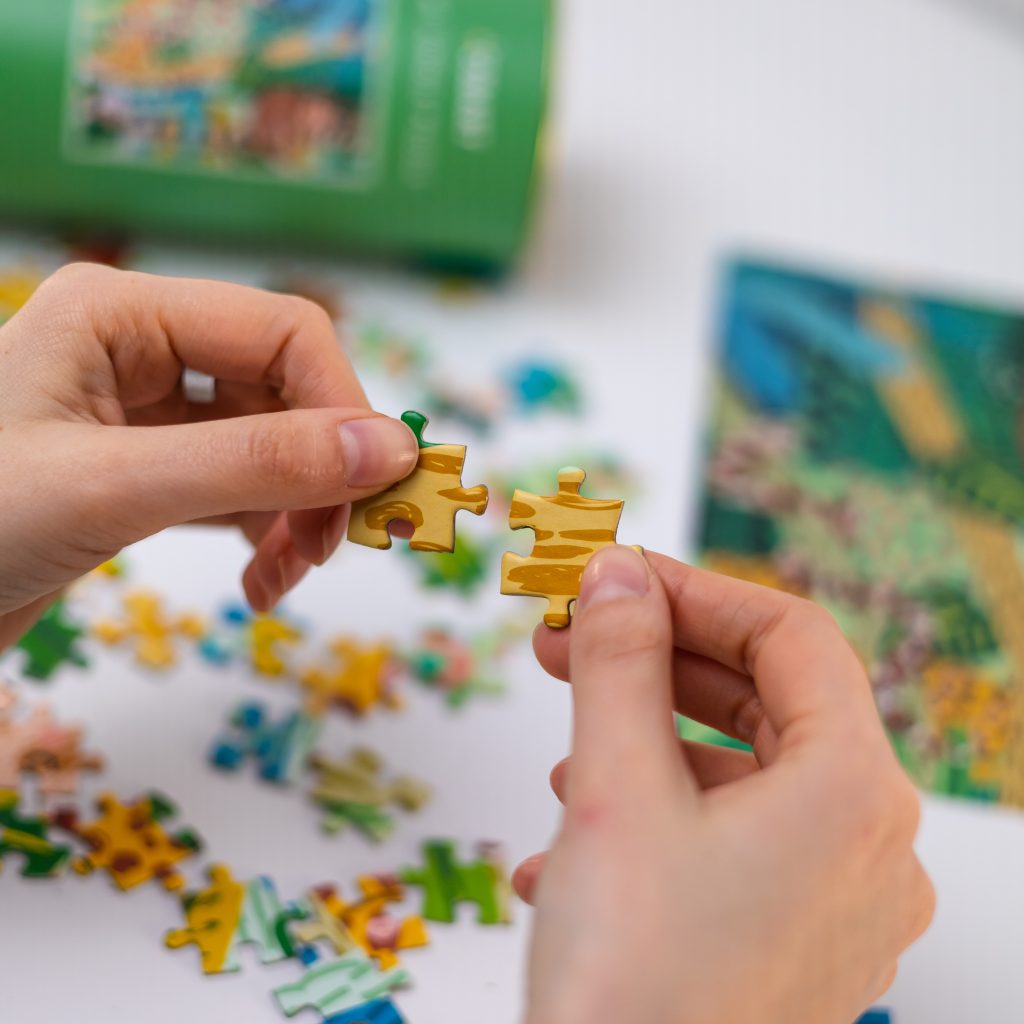
- Jigsaw puzzles: These not only provide entertainment but also challenge users to think critically about how different pieces fit together.
- Rubik’s cubes: A classic example that requires manipulation and logical thinking to solve, allowing individuals to sharpen their spatial reasoning skills.
- 3D modeling games: Modern technology provides platforms for creating and interacting with three-dimensional objects, facilitating an engaging learning experience.
The Broader Impact on Society
Research indicates that engaging with these challenges can lead to significant improvements in critical thinking, creativity, and overall academic performance. In Nigeria, where many students face educational challenges due to a lack of resources, promoting spatial reasoning skills can empower a new generation to tackle complex global problems. These skills are not just academic; they build the confidence and competence necessary to thrive in a competitive world, whether in technology, science, or arts.
Conclusion
As we look to the future, the integration of spatial reasoning puzzles in education can be a transformative initiative. By cultivating such skills, we contribute to producing informed individuals who can innovate and contribute positively to both local and global communities. With the right focus and resources, Nigeria can harness the potential of its youth, preparing them for the many challenges that lie ahead.
LEARN MORE: This related article may interest you
The Role of Spatial Reasoning Puzzles in Cognitive Development
Spatial reasoning puzzles are more than just a recreational pastime; they serve as significant catalysts for cognitive development. Engaging with these puzzles can foster skills that have hand-in-hand impacts on intelligence and learning capability. As the educational landscape in Nigeria increasingly shifts to embrace innovative teaching methods, integrating spatial reasoning activities is essential to developing a well-rounded intellect among students.
The Cognitive Benefits of Spatial Reasoning
Studies have shown a strong correlation between spatial reasoning abilities and academic performance, particularly in subjects like mathematics and sciences, where visualization plays a crucial role. Children who regularly engage with spatial puzzles tend to:
- Enhance problem-solving skills: By manipulating shapes and thinking critically about how different parts fit together, children improve their ability to solve complex problems.
- Boost memory retention: Spatial reasoning activities help create mental maps that can aid in retaining information and recalling it later, thus improving overall academic performance.
- Develop logical reasoning: Engaging in puzzles fosters logical thinking, allowing students to approach academic challenges with a structured mindset.
Encouraging Early Development Through Play
One of the most effective ways to nurture spatial reasoning is through play. For young learners in Nigeria, simple yet thought-provoking puzzles can be integrated into educational activities at home or school. Parents and educators can encourage spatial awareness through:
- Building blocks: These not only stimulate creativity but also challenge children to think about balance and structure.
- Maze games: Navigating through mazes enhances a child’s ability to visualize paths and develop strategic thinking.
- Origami: This intricate art form requires understanding angles and geometric shapes, honing both fine motor skills and spatial awareness.
Real-World Applications Beyond the Classroom
The practical implications of strong spatial reasoning extend beyond academic success. For instance, in the realms of technology and design, engineers and architects rely heavily on spatial skills to conceptualize and execute their ideas. In Nigeria, where technology is on the rise, cultivating spatial reasoning skills among students can lead to innovations that address local and global challenges. Students who excel in spatial reasoning are better equipped for fields such as computer science, engineering, and even the arts, providing them with a competitive edge in a rapidly evolving job market.
Moreover, with the growing emphasis on STEM education, incorporating spatial reasoning puzzles into these curricula can help stimulate interest in technical fields early on. By understanding the broader significance of spatial reasoning puzzles, educators can not only enhance intelligence but also encourage learners to explore diverse career paths that contribute to societal development. The journey towards a more innovative and competent generation begins with a solid foundation in spatial reasoning.
The Significance of Spatial Reasoning in Cognitive Growth
Spatial reasoning plays a critical role in the development of intelligence, influencing various cognitive abilities including problem-solving, decision-making, and abstract thinking. Engaging with spatial reasoning puzzles can help individuals of all ages enhance these skills. A study revealed that regular engagement in these puzzles significantly improves mental rotation abilities, which is crucial for numerous STEM (Science, Technology, Engineering, and Mathematics) disciplines.
Furthermore, spatial reasoning is not limited to academic success; it extends into everyday life—navigating through city streets, packing luggage efficiently, and even arranging furniture in a room. These practical applications underline how spatial reasoning puzzles contribute to improved life skills. For children, these puzzles serve as a framework for early cognitive development, fostering not only intelligence but creativity.
Moreover, adults who are prompt to solve spatial reasoning challenges often find themselves more adept in critical industries such as architecture, engineering, and design, where spatial awareness is crucial. These puzzles encourage a mindset that seeks out solutions through spatial manipulation and visualization, thus strengthening the brain’s neural pathways.
| Category 1 | Category 2 |
|---|---|
| Cognitive Development | Spatial puzzles enhance critical thinking abilities. |
| Practical Applications | Essential for tasks in daily life and various professions. |
Engaging with these puzzles enhances not only immediate problem-solving skills but cultivates a long-term cognitive framework crucial for adapting to new challenges. As we delve deeper into the intricate world of spatial reasoning, the link between solving these puzzles and overall intelligence becomes evidently significant.
CHECK OUT: Click here to explore more
Integrating Spatial Reasoning in Modern Education
As we explore the importance of spatial reasoning puzzles in the development of intelligence, it becomes evident that their integration into modern education systems can yield significant benefits. In Nigeria, where the educational sector is continually evolving, harnessing the potential of spatial reasoning can provide learners with the tools needed to excel in an increasingly competitive world.
Fostering Creative Thinking and Innovation
Spatial reasoning puzzles not only enhance analytical skills but also play a crucial role in fostering creative thinking. Engaging with these challenges encourages children to think outside the box, as they visualize outcomes and scenarios that are not immediately apparent. For instance, when students work on spatial puzzles, they may discover unique solutions to problems, a skill that’s invaluable in creative industries such as film, design, and marketing. With Nigeria’s burgeoning film industry, known as Nollywood, there’s a pressing need for innovative thinkers who can bring fresh ideas to the table. Encouraging creativity through spatial reasoning puzzles can inspire the next generation of filmmakers, designers, and storytellers.
Promoting Team Collaboration and Communication Skills
Collaborative puzzle-solving can enhance team dynamics in educational settings. When students engage with spatial reasoning puzzles in groups, they must communicate effectively to strategize and share ideas. This not only helps develop their social skills but also prepares them for real-world environments where teamwork is essential. In professions such as architecture or engineering, professionals often work in teams to solve complex problems. By incorporating spatial reasoning puzzles into group activities, educators in Nigeria can equip students with collaborative skills that are critical in their future careers.
Utilizing Technology for Enhanced Learning
The rise of technology in education presents an exciting opportunity to expand the role of spatial reasoning puzzles. With the increasing availability of educational apps and online platforms, teachers can introduce digital puzzles that capture students’ interest while still developing their spatial skills. For example, augmented reality and 3D modeling applications can immerse students in environments that demand spatial reasoning, allowing them to experience concepts firsthand. This tech-forward approach resonates particularly well with Nigeria’s youth, who are generally tech-savvy and drawn to engaging multimedia experiences.
Building Resilience and Patience
Another often-overlooked benefit of spatial reasoning puzzles is their ability to instill resilience and patience in learners. Successfully tackling these puzzles often requires multiple attempts and a willingness to learn from mistakes. This process teaches students that failure is a part of learning, encouraging a growth mindset. In a country like Nigeria, where the educational environment can be competitive and at times daunting, cultivating resilience through puzzle-solving can prepare students to face challenges with confidence. This ability to persist when faced with obstacles not only enhances intelligence but also contributes to personal growth.
The integration of spatial reasoning puzzles into the Nigerian educational framework can have multifaceted advantages for students. By focusing on enhancing intelligence and other critical cognitive skills, educators can prepare learners for a brighter future, armed with the skills necessary to thrive in a rapidly changing global landscape. The potential for spatial reasoning puzzles to reshape how intelligence is understood and nurtured is vast, and it is a conversation worth pursuing.
RECOMMENDED: Check out this similar article
Conclusion
In summary, the exploration of spatial reasoning puzzles reveals their profound impact on intelligence development, particularly within Nigeria’s evolving educational landscape. As we have seen, these puzzles not only enhance critical cognitive skills such as problem-solving and analytical thinking but also nurture creativity and innovation—vital components for success in today’s competitive job market.
Moreover, the collaborative nature of puzzle-solving fosters essential communication skills among students, preparing them for teamwork in future careers. The integration of modern technology into these learning experiences further amplifies their potential, making education more engaging and accessible to a tech-savvy generation. Leveraging apps and online platforms can ignite students’ interest and provide immersive learning experiences that traditional methods may lack.
Additionally, by encouraging resilience and a growth mindset, spatial reasoning puzzles equip students to navigate the challenges of both academic and personal life. In a country where educational pressures can be intense, instilling these characteristics is invaluable for personal development.
As Nigeria continues to embrace educational reforms, prioritizing the uncovering of spatial reasoning through puzzles could be key to nurturing a new generation of thinkers, innovators, and leaders. Ultimately, spatial reasoning puzzles are not just tools for intellectual growth; they are a gateway to a brighter, more adaptive future for Nigerian youth, fostering the skills necessary to thrive in a rapidly evolving world.