How Puzzles Stimulate Creativity and Innovation

The Importance of Puzzles in Fostering Creativity
Puzzles have long captivated enthusiasts not only for the enjoyment they provide but also for their potential to unlock our mental faculties. Engaging with various forms of puzzles can lead to remarkable improvements in creativity and innovation. As individuals wrestle with the complexities of puzzles, they are essentially training their brains to think in novel and multifaceted ways.
The benefits of engaging with puzzles are plentiful and can have profound effects on cognitive development. Consider the following aspects:
- Problem-Solving Skills: Every puzzle presents a unique challenge that necessitates innovative solutions. For example, solving a Sudoku can improve logical reasoning, while a crossword puzzle can enhance vocabulary and verbal reasoning. The struggle to find answers in these situations encourages a mindset geared towards persistence and exploration.
- Pattern Recognition: Many puzzles, such as jigsaw puzzles or number games, are built around recognizing trends and relationships. This process sharpens analytical thinking. For instance, a child playing a game of ayo, a traditional Nigerian board game, must identify patterns in their opponent’s moves to devise a winning strategy. Such activities play a crucial role in honing the ability to discern nuances in any field.
- Adaptability: Puzzles often introduce unexpected obstacles, prompting players to shift their strategies. This adaptability is essential in today’s fast-paced world where change is constant. Learning to pivot in mid-game can translate to greater flexibility in real-life scenarios, such as adapting business strategies in response to market dynamics.
In Nigeria, traditional games like ayo and various modern jigsaw puzzles are not merely sources of recreation; they also serve as significant tools for enhancing cognitive abilities. These activities often carry a communal essence where players collaborate, exchanging ideas and strategies, which can spark collaborative problem-solving. This communal interaction is vital for nurturing creativity, as it allows individuals to explore diverse viewpoints.
Moreover, the influence of puzzles extends into various sectors, from the arts to sciences. In the creative industries, artists and designers often engage with puzzles to unlock new methods or themes. Similarly, in scientific fields, researchers might find that approaching a significant challenge through the lens of a puzzle leads to groundbreaking discoveries. Regular engagement with puzzles can cultivate pathways for imaginative thought, ultimately leading to breakthroughs in work and innovation.
As we explore the multifaceted impact of puzzles, it becomes clear that these seemingly simple activities hold the potential for significant cognitive development. Thus, the next time you encounter a puzzle, remember that you are not just playing; you are actively expanding your creativity and enhancing your problem-solving abilities.
RECOMMENDED: Check out this similar article
The Cognitive Benefits of Engaging with Puzzles
The journey through puzzles is not merely a leisure pursuit; it is a profound exercise for the mind that fosters creativity and innovation. Engaging with puzzles encourages people to think outside the box, a skill that translates seamlessly into various aspects of life, from academics to professional environments. In Nigeria, where traditional games like ayo and modern jigsaw puzzles are integrated into daily life, the cognitive advantages they offer are particularly noteworthy.
One of the paramount benefits of solving puzzles lies in the enhancement of critical thinking. When faced with intricate problems, individuals must dissect information, analyze their predicaments, and forge novel solutions. Consider crossword puzzles, which not only bolster vocabulary but also stimulate an individual’s ability to make associations and think laterally. In a country rich with cultures and languages like Nigeria, this can greatly influence a person’s communication skills and creative expression.
- Enhanced Memory: Puzzles often require players to remember rules, sequences, or patterns, leading to improved memory retention. The process of recalling and applying this information is dynamic for the brain. For instance, playing traditional games such as oma, a popular local board game, accentuates memory skills by encouraging players to remember their strategies and adapt to their opponents’ moves.
- Improved Focus: Concentrating on tasks like completing a jigsaw puzzle or solving a challenging riddle forces individuals to hone their focus. In an age filled with distractions, maintaining concentration becomes a valuable asset. The deep focus required for tackling these puzzles can result in greater productivity in the workplace or during studies.
- Increased Emotional Resilience: Engaging with difficult puzzles often leads to frustration, but the key to success lies in perseverance. Embracing the challenge to overcome obstacles nurtures emotional strength and resilience, qualities that are essential in both professional growth and personal development.
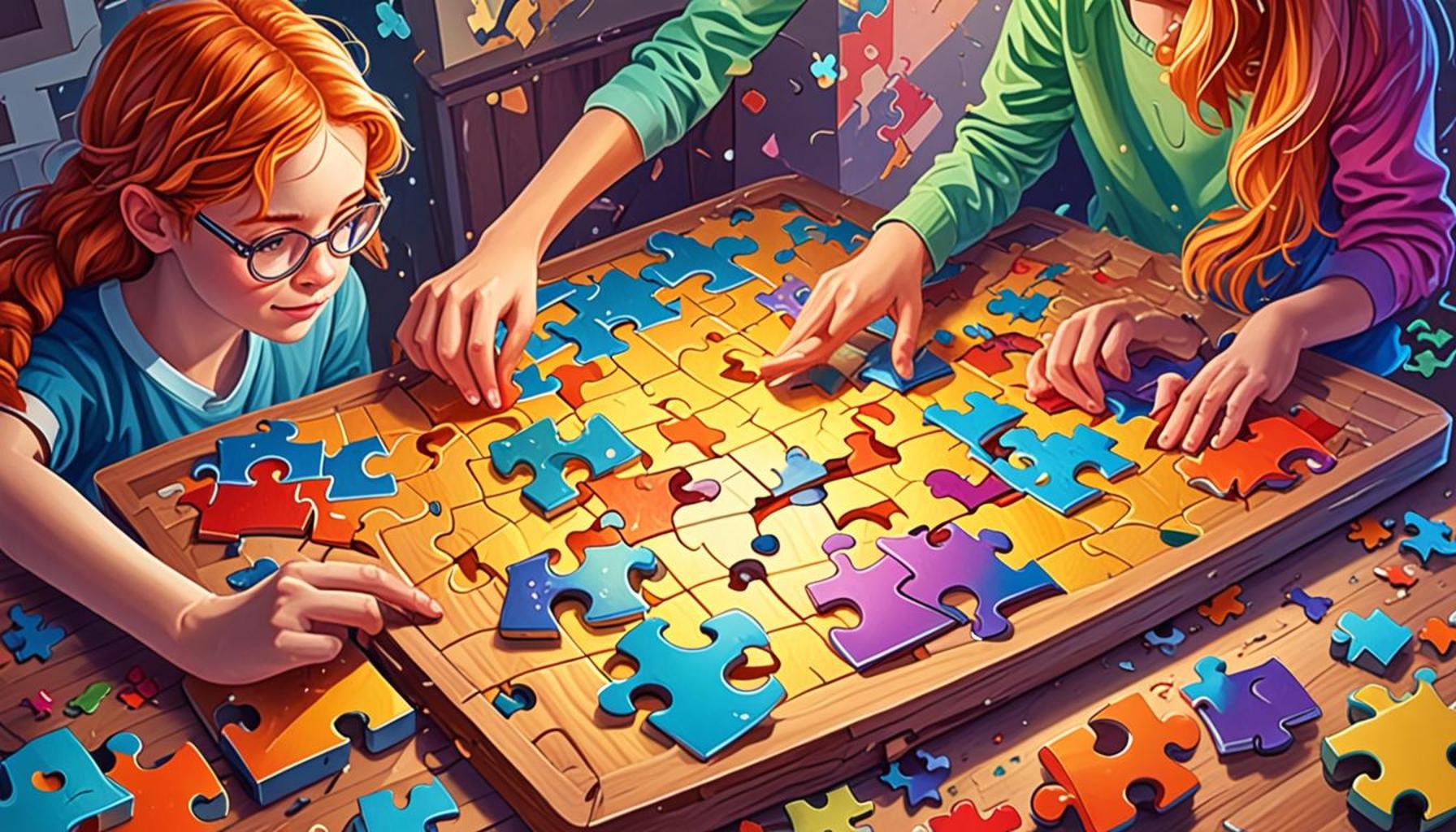
Furthermore, the dynamic nature of puzzles fuels collaborative learning. When people come together to solve a puzzle, they share insights and strategies, paving the way for a richer understanding of complex issues. In educational contexts, such as Nigerian classrooms, group puzzle-solving activities can enhance not just academic performance but also foster teamwork and problem-solving skills among students.
Moreover, the impact of puzzles extends beyond individual growth into community-building. Puzzles foster a sense of togetherness, where players learn from one another’s strengths and approaches. Such interactions can spark fresh ideas and innovative solutions, highlighting the integral role of community engagement in enhancing creativity.
As we delve deeper into the intersection of puzzles and innovation, it becomes increasingly evident that these engaging brain challenges offer more than just entertainment. They open doors to an enhanced understanding of our cognitive capabilities, urging us to explore the vast realms of possibilities that elevate our creative endeavors.
| Advantage | Description |
|---|---|
| Enhanced Problem-Solving Skills | Engaging in puzzles develops critical thinking and evaluation processes. |
| Boosted Creative Thinking | Working through puzzles encourages novel approaches and unique solutions. |
| Cognitive Flexibility | Switching strategies in puzzles promotes adaptability in complex situations. |
| Stronger Pattern Recognition | Puzzles refine skills to identify patterns, aiding in various creative fields. |
| Social Collaboration | Group puzzles foster teamwork and collective brainstorming experiences. |
Engaging with puzzles—whether they’re jigsaw puzzles, crosswords, or logic exercises—offers more than mere entertainment. This stimulating activity challenges the brain, promoting both creativity and innovation in ways that extend into everyday problem-solving and project development. The act of piecing together information and discovering solutions enhances cognitive functions and inspires out-of-the-box thinking. As we venture deeper into how these brain teasers afford mental fitness, we learn how applying such skills can revolutionize approaches across disciplines from art to technology. Exploring new types of puzzles encourages a consistent practice that sharpens focus and resilience—a toolkit essential for tackling modern challenges effectively.
CHECK OUT: Click here to explore more
Puzzles as Catalysts for Innovation
As we transition from the cognitive benefits of puzzles, it is essential to explore how they serve as powerful catalysts for innovation. Puzzles, in their many forms, serve as a metaphorical playground for the mind, allowing individuals to experiment, hypothesize, and refine their ideas. They beckon creative thinkers to explore multiple pathways toward solutions, which mirrors the iterative process of innovation in real-world scenarios.
In a global economy that increasingly values innovation, the role of puzzles in fostering this skill cannot be understated. They revolve around problem solving and developing alternative strategies. For example, consider the implementation of puzzles in corporate training sessions in Nigeria. Companies are increasingly incorporating logic puzzles and brain teasers into workshops. This not only fosters a creative work environment but enhances collaborative efforts among employees, enhancing team dynamics, and ultimately leading to innovative solutions for business challenges.
- Encouraging Divergent Thinking: Puzzles allow for divergent thinking, where numerous solutions may arise from a single problem. In Nigerian educational settings, this can encourage students to brainstorm various approaches rather than limiting them to conventional answers. Activities that challenge students to assemble stories or solve complex math problems through puzzles open the door to innovative thinking.
- Real-World Application of Theories: Puzzles can also facilitate the application of theoretical concepts to real-world situations. For instance, engineering students in Nigeria might tackle structural puzzles that directly relate to local infrastructure. Such students not only enhance their problem-solving skills but also intuitively integrate the theoretical underpinnings of their fields with practical solutions, fostering an innovative mindset.
- Fostering a Growth Mindset: Engaging with puzzles pushes individuals towards adopting a growth mindset, encouraging them to view failures not as setbacks but as learning opportunities. The acceptance of ‘failure’ as a stepping stone to success nurtures a culture of experimentation. This aligns with Nigeria’s burgeoning start-up ecosystem, where entrepreneurs are encouraged to innovate and iterate based on trial and error, an approach honed through puzzles.
Additionally, the economic implications of puzzle-driven innovation are profound. Studies indicate that companies that prioritize innovation are substantially more likely to experience higher profitability and market share. As Nigerian entrepreneurs leverage puzzles in brainstorming sessions, they not only improve their own idea-generation processes but also inspire their teams to think creatively, setting the foundation for groundbreaking solutions that are both socially and economically impactful.
The globalization of ideas and practices underscores the importance of stimulation through cognitive activities like puzzles. When communities engage in collaborative puzzle solving, whether through local tournaments or educational workshops, they cultivate an ecosystem rich in creative solutions and collective intelligence. This highlights how puzzles bridge divides, allowing for shared experiences that lead to innovative cultural products—be it in art, technology, or community development.
Thus, the integration of puzzles into various facets of life in Nigeria offers not only entertainment but a golden opportunity for creative exploration. They serve as a unique conduit for developing critical skills necessary for navigating the complexities of modern challenges, making them an indispensable tool in the quest for innovation.
ADDITIONAL INSIGHTS: Expand your understanding here
Conclusion: Unlocking Potential Through Puzzles
In summary, puzzles are not merely entertaining distractions; they are pivotal tools for fostering creativity and innovation in various spheres of life, particularly in Nigeria. By encouraging divergent thinking, puzzles facilitate the exploration of multiple solutions to a single problem, inspiring both students and professionals to move beyond conventional boundaries. The integration of real-world applications into puzzle-solving enhances critical thinking, bridging gaps between theoretical knowledge and practical execution, vital for addressing local challenges.
Moreover, the culture of viewing failure as an opportunity to learn, nurtured through engagement with puzzles, aligns seamlessly with Nigeria’s dynamic entrepreneurial landscape. This cultural shift inspires a generation of innovators willing to take risks and drive socioeconomic progress. As corporations and educational institutions adopt puzzle-based training approaches, they cultivate a fertile ground for collaboration and collective intelligence, leading to innovative outcomes that can significantly impact the local economy.
As we navigate an increasingly complex world, the ability to think outside the box becomes essential. The act of puzzle-solving fosters a rich environment for creative exploration, urging individuals to connect dots that may not seem related at first. Thus, embracing puzzles in both educational and professional settings is not only an investment in skill development but a step toward nurturing a resilient and innovative society. This presents a clarion call for all—be it educators, business leaders, or community advocates—to recognize and harness the power of puzzles as a key driver of creativity and innovation in Nigeria and beyond.